The Forgetting Curve Is Real: What L&D Can Do About It
The Ebbinghaus forgetting curve training shows most new info vanishes fast without action. L&D pros can fight it with simple steps to boost knowledge retention.
You build a shiny new training program. Everyone nods along in the session. A week later, they act like it never happened. Sound familiar?
This is the daily grind for L&D teams. Learners forget fast. Deadlines pile up. And performance stays flat because skills slip away.
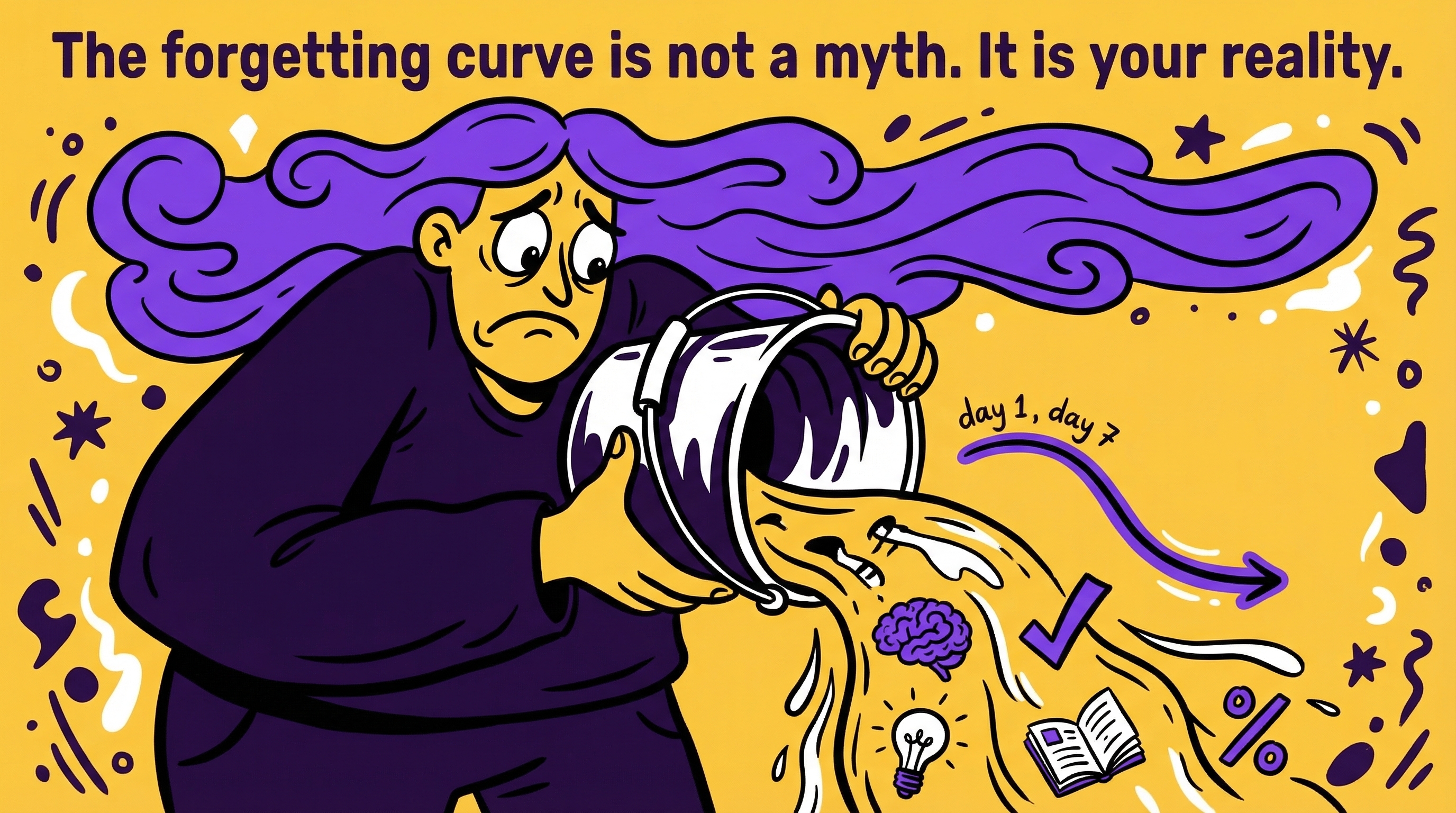
The fix starts with facing the truth. The Ebbinghaus forgetting curve training problem is not a myth. It is your reality unless you change course.
What This Means in Real Work
Hermann Ebbinghaus graphed how memory fades over time. He tested it on himself with nonsense syllables. Without review, recall drops sharp at first, then levels off.
In one study, people forgot much of what they learned in hours. Ebbinghaus found about 50% gone in the first hour. It hit around 70% in a day.
Picture a sales team training. They learn product updates in a one-hour workshop. By next week, reps stumble on key facts during calls. Deals stall. Bosses complain. That is the curve at work.
It hits every role. New hires forget compliance rules. Managers blank on leadership tips. Without action, your training dollars vanish.
Practical Steps
Juniors, start here. These steps fit any budget or toolset. Pick one and test it today.
- Plan spaced repetition from day one. Send a quick quiz one day after training. Follow with another at day three. Space them out over weeks. This fights the steep drop-off.
- Add retrieval practice. Skip endless slides. Ask learners to recall key points without notes. Use quizzes or flashcards. Correct answers stick better.
- Break content into micro sessions. Aim for 5-10 minute bursts. Short hits reduce overload and match how brains hold info.
- Link it to real tasks. End each review with a job-related challenge. How does this skill fix a current problem? This boosts learning transfer.
- Mix formats. Pair text quizzes with short videos. Hands-on practice works too. Variety keeps attention high.
Track what works. Adjust based on feedback. Small changes flatten the curve fast.
Common Mistakes
- One and done training. You run a workshop and call it good. No follow-up. Learners forget 90% in a month without reinforcement. Always build in reviews.
- Ignoring spacing. Cramming everything into one long session feels efficient. But massed practice loses to spread-out sessions. Space it out.
- No retrieval checks. You test knowledge at the end once. Passive reading or watching fades quick. Active recall is key.
- Overloading brains. Long modules pack too much info. Cognitive load spikes. Retention tanks. Keep bites small.
Leader Lens
Seniors, focus on impact. Measure completion rates on spaced reviews. Track quiz scores over time. Watch on-job performance pre and post.
Spot risks like low adoption. If reps skip reinforcements, tweak incentives. Check if knowledge retention lifts metrics like error rates or speed.
Adoption grows with easy access. Mobile-friendly tools help. Tie to goals like sales quotas. Prove ROI with real changes.
Freelancer Lens
Clients love results. Build in spaced repetition to cut rework calls. They see skills stick. You deliver premium value.
Finish projects faster. Pre-plan review schedules. Clients notice fewer refresher requests. Charge more for proven learning transfer.
Stand out. Pitch Ebbinghaus fixes upfront. Show how you beat the curve. Land bigger gigs with data-backed designs.
Quick Checklist
- Does your plan include reviews at day 1, 3, and 7?
- Are quizzes active recall, not just multiple choice?
- Is content chunked into under 10-minute pieces?
- Do activities link to real work tasks?
- Will you track scores and feedback weekly?
FAQ
What is the Ebbinghaus forgetting curve?
It graphs rapid memory loss after learning. Steep drop in first days without reinforcement[1][5].
How does spaced repetition help?
Reviews at growing intervals reset the curve. Boosts long-term hold better than cramming[1][3].
Can juniors apply this without fancy tools?
Yes. Use email quizzes, Google Forms, or paper flashcards. Focus on schedule and recall[2].